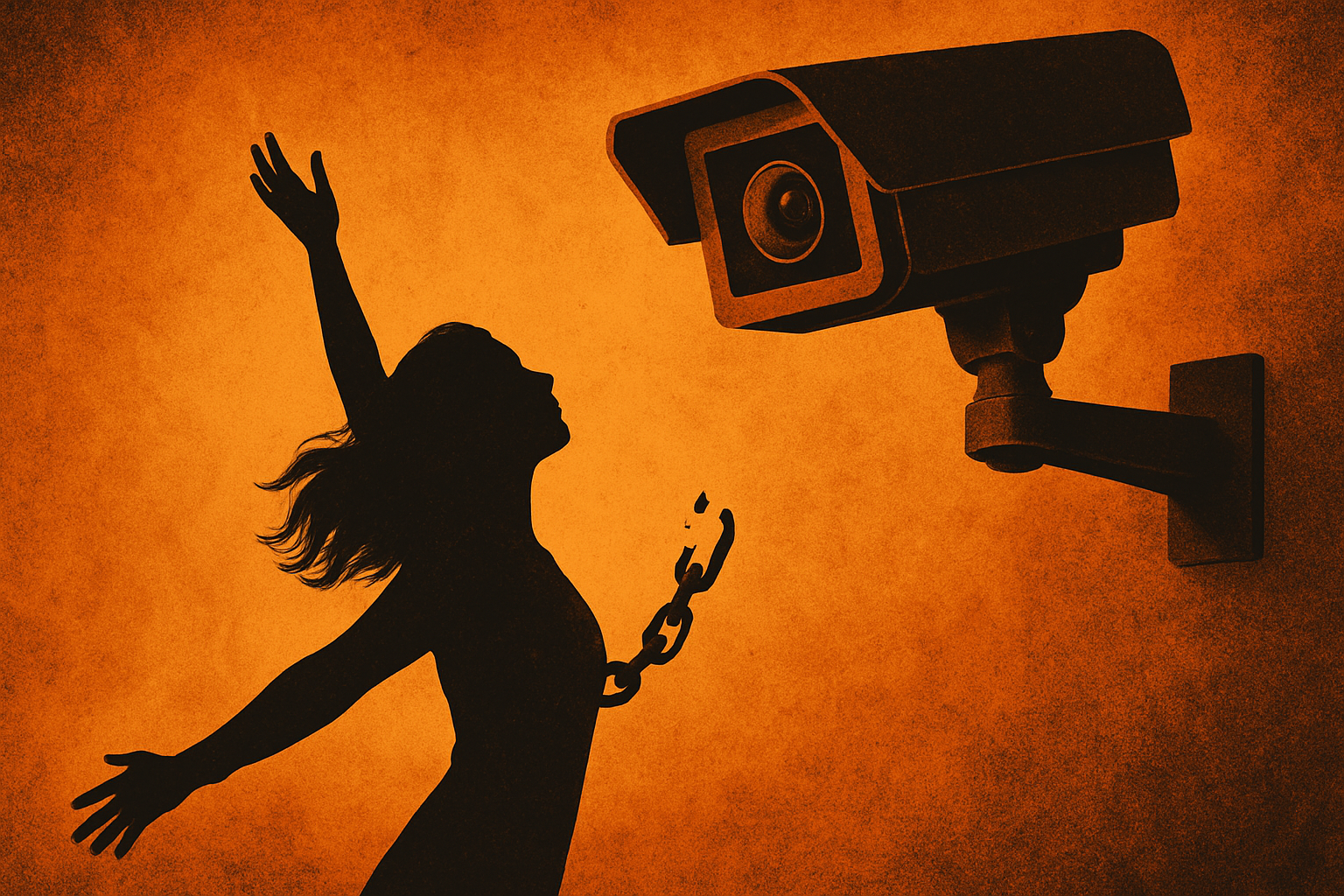
In today's digital age, individual data has become the most important resource and "more precious than oil or gold." Every click we make online, every conversation we have on free apps is turned into raw material for companies and governments to predict and guide our behavior. Recent reports indicate that the number of internet users in the Arab world has reached about 348 million people, or about 70.(Shankar, 2025). This widespread internet penetration in the region means that tech companies and governments have vast amounts of data about our citizens, raising the question: are we really free if these algorithms can predict our choices before we make them?
Recent statistics indicate that the vast majority of smartphone apps collect user data for commercial purposes. For example, 72.6% of iOS apps record user data, and notably, free apps track users four times more than paid apps (Howarth, 2025).More broadly, it is estimated that 80% of all apps use personal data for commercial purposes (Smith, 2025), such as displaying targeted ads or promoting other products. In the same vein, the average ad revenue per user on Google increased from $1.07 in 2001 to $36.20 in 2019 (Smith, 2025), reflecting the increasing value companies place on users' digital information.
In other words, according to the logic of the hidden data economy, digital products are not free; we ourselves are the "product." Companies pay the cost of providing the service by collecting data and turning it into profits through advertising and precision targeting. This model makes privacy a direct price for convenience and speed, and turns the relationship between the user and the platform into an unbalanced reciprocal one.
In fact, the "notice and consent" model is the accepted legal framework for privacy protection in many Western countries, where users are given the option to read and agree to the terms of use. However, studies show that most users do not read these long and complex documents.In a Pew survey (2023) of Americans, more than half of users (56%) admitted that they often click "OK" without reading the privacy policy, and 61% even find these documents ineffective in explaining how their data is used (Pew Research Center, 2023). This points to the illusion of choice: we show formal consent to share our information without truly understanding what the contract between us and apps entails, and our complete reliance on this framework for privacy protection is arguably an illusion.
Many sources of data collection are never visible to the user: from location tracking devices in phones to street surveillance cameras and pattern-mining algorithms in browsing logs, many sources of data collection are never visible to the user.This gap highlights the difference between voluntary surveillance-which we formally "consent" to by clicking (even superficially) on the terms-and coercive surveillance that occurs without our knowledge or consent. In the former, the person thinks they have a choice even if they do not actually exercise it; in the latter, the choice is completely denied because the data is silently extracted from around them (Lynch, 2022).
In short, freedom in the age of digital surveillance is complex and not absolute. The algorithmic ability to effectively read our behavioral patterns redraws the boundaries of individual will. Similarly, "free services" impose a non-monetary price: our private information is turned into currency that guides advertising discourses and public policies. While we pretend to voluntarily consent to sharing our data, hidden tracking tools continue to shape our lives without our permission.In light of this, individual freedom is no longer just a legal or philosophical issue, but also a technical and political one. The growing global awareness of the seriousness of the issue is pushing for more laws and regulations (71% of the world's countries have privacy legislation (Smith, 2025)), but the effectiveness of these measures depends on society's ability to challenge surveillance economies and put technology at the service of people, not the other way around.Ultimately, the question remains: can we redefine our freedom to fit this new reality, or will we succumb to the predictability of algorithms and the limitations of limited transparency? The answer remains at the center of the current academic and political debates about the future of digital rights.
Watch the video for more
Comments