The confrontation between the United States and Iran has entered its tenth day amid widespread strikes and regional repercussions. According to the Associated Press, Tehran did not announce over the weekend a new toll after earlier figures that spoke of more than 1,200 deaths inside Iran, while the agency said that more Iranians continued to leave the country, while the death toll in Lebanon rose to 397 and in Israel to 11.
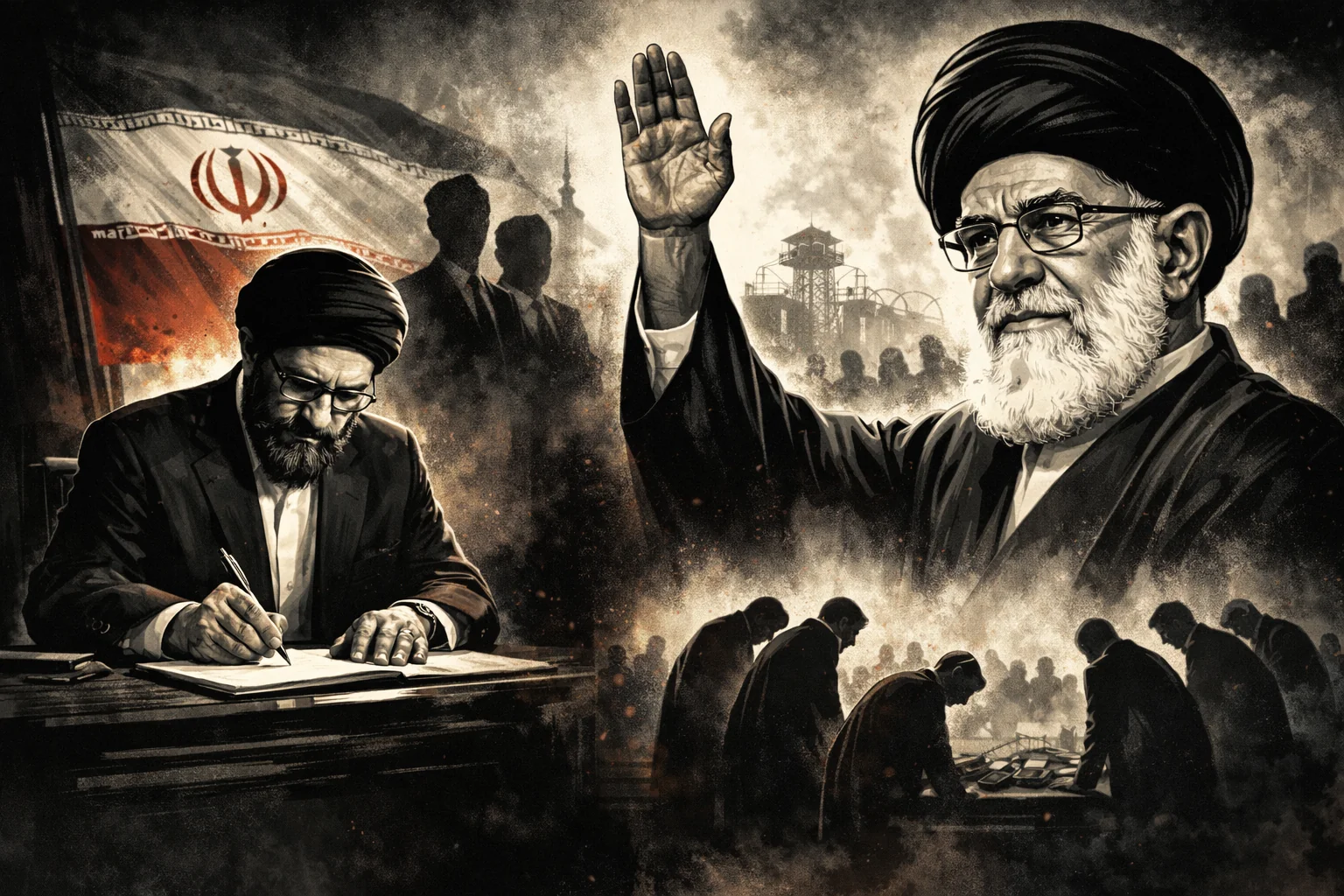
The most notable development of the day was the announcement that Mojtaba Khamenei, son of the late Iranian leader Ali Khamenei, has been chosen as Iran's new supreme leader. The Associated Press described the move as a new indication of the hardening of the Iranian leadership after more than a week of US and Israeli bombing, noting that Mojtaba Khamenei, who is considered more hardline than his father, will oversee the armed forces and any decision related to Iran's nuclear program. The agency also reported that the new leader has not appeared in public since the start of the war and had not made any public statement in his new position at the time of coverage.
US President Donald Trump said in a telephone interview with the Times of Israel that the decision to end the war with Iran would be a mutual decision with Israeli Prime Minister Benjamin Netanyahu. Reuters quoted him as saying: I think it's mutual ... a little bit. We've been talking. I'll make a decision at the right time, but everything's going to be taken into account. This statement, as paraphrased by Reuters, reflects continued political coordination between Washington and Tel Aviv on the course of the ongoing operations and how to end them (Reuters, 2026a).
On the ground, the Associated Press reported that Israel continued to strike targets inside Iran and Lebanon during the past hours, while the agency reported that Israeli Prime Minister Benjamin Netanyahu vowed that there would be many surprises in the next phase of the war. It added that Israel announced the destruction of the headquarters of the Revolutionary Guards Air Force, which is responsible for the command of ballistic missiles, as well as hitting missile launchers and missile manufacturing facilities. In Beirut, the agency reported that the Israeli army said on Monday that it was carrying out strikes in the Lebanese capital, especially against sites linked to the Al-Qard al-Hassan Foundation, with renewed warnings to residents in the southern suburbs to leave the area.
Meanwhile, Iranian attacks continued on the Gulf perimeter and various locations in the region. The Qatari Defense Ministry said on Monday that it intercepted 17 missiles and 6 drones launched from Iran towards Qatar, confirming that there were no damages or casualties. A new missile attack was reported in Abu Dhabi, the Associated Press reported, with calls for residents to stay in safe places. In Bahrain, the AP reports that Manama has accused Iran of targeting one of its vital desalination plants, making the targeting of civilian infrastructure in the Gulf one of the day's most prominent headlines.
In Saudi Arabia, Reuters reported that a projectile landed on a residential site in Al-Kharj, killing two people and injuring 12 others. The agency added that the two dead were of Indian and Bengali nationality, while it said that Iran's Revolutionary Guard had earlier announced that it had targeted radar systems in locations including Al Kharj. In parallel coverage, the Associated Press noted that Saudi Arabia tightened its warnings to Iran, telling Tehran that it will be the biggest loser if it continues to attack Arab countries, after a new drone attack that apparently targeted the huge Shaybah oil field.
In Kuwait, Reuters reported that the Interior Ministry mourned two border officers killed in the line of duty amid rising regional tensions. It quoted the text of the official statement, which said that the ministry mourns the two martyrs of duty, Lieutenant Colonel Abdullah Imad Al-Sharah and Major Fahd Abdulaziz Al-Majmoud from the General Directorate of Land Border Security, who were martyred at dawn. The agency also reported that the Kuwaiti army announced missile strikes and marches near the international airport on the same day, while the Associated Press reported the death of two border guards in Kuwait as part of the losses recorded in the Gulf.
With regard to US casualties, the AP said that the US military announced the death of a seventh US soldier from injuries sustained during an Iranian attack on troops stationed in Saudi Arabia. She added that the first six soldiers were reservists and were killed in an attack on March 1 on a port in Kuwait. The agency also noted that Trump participated in a ceremony to receive the remains of American soldiers killed in the war (Associated Press, 2026a).
In Iran itself, the Associated Press reported that the United States has warned Iranians to stay indoors, saying that Iran is launching its attacks from densely populated areas. The AP also reported that further indications emerged that the US was behind the deadly strike on a girls' school in Iran on the first day of the war, noting that Trump had hinted at blaming Iran for the strike. Meanwhile, the international debate over naval warfare continued after the agency reported that Washington and Tehran presented two contradictory accounts regarding the sinking of the Iranian warship Iris Dana near Sri Lankan waters on March 4; the US Indo-Pacific Command rejected the description of the ship as unarmed, while Iranian officials said it was performing a non-combat mission.
On the diplomatic and humanitarian front, the United States continued to make arrangements to evacuate its nationals from the region. The US State Department said, according to Reuters, that charter flights and ground operations organized by the US government are ongoing and will expand, after announcing a few days ago that the first government charter flight had left the region. Reuters reported that the department said on March 5 that it had helped 10,000 Americans who requested guidance to leave, while the Associated Press said today that more than 32,000 Americans have left the region since the start of the war. State Department data on its website also shows that a global warning remains in place after the start of U.S. combat operations in Iran, and that Kuwait remains at the travel reconsideration level with an update reflecting the mandatory departure of non-emergency government employees and their family members since March 2.
Economically, the war also dominated the global news landscape. Reuters reports that Saudi Arabia has begun cutting oil production, while Iraq has cut output from its main southern fields by 70% to 1.3 mn barrels per day, and the Kuwait Petroleum Corporation has begun cutting production with the declaration of force majeure. The agency added that shipping traffic through the Strait of Hormuz is almost completely halted, with hundreds of tankers stuck in the Gulf or near the strait. In the markets, Reuters reported that Brent crude jumped at one point in trading by nearly 30 percent, while the Associated Press said that prices exceeded $100 per barrel. Reuters also reported that more than 37,000 flights to and from the Middle East have been canceled since February 28, with some jet fuel prices doubling and some fares jumping sevenfold in a week.
In the latest international developments related to the war, Ukrainian President Volodymyr Zelensky said, according to the Associated Press and Reuters, that Ukraine has received 11 requests from countries seeking to benefit from its experience in countering Iranian drones, including countries neighboring Iran, European countries and the United States. He said, according to the agency, that the priority is clear that the Iranian regime should not gain any advantage at the expense of those defending lives, and that Kiev is ready to provide support that does not weaken its self-defenses.
Thus, March 9 ends on a scene with three major headlines: The transfer of the top leadership in Iran to Mojtaba Khamenei, the continuation of the mutual attacks and their effects on the Gulf, infrastructure and aviation, and US statements confirming continued coordination with Israel in the decision to end the war, while the human and regional toll remains likely to rise further as the operations continue.
Comments