Quiet Luxury emerged as a global cultural wave between 2022-2024, and its rise in popularity was linked to Succession's elite "dress codes." The flood of content on platforms-especially deconstructing the looks of the rich and explaining the "visible signs of wealth"-has made it a trend:The flood of content on platforms-particularly deconstructing the looks of the rich and explaining the "invisible signs of wealth"-has turned this style into a trend that transcends fashion and becomes a conversation about class, prestige, and taste.This fashion has sparked controversy because it seems, on the surface, to be a triumph of good taste and consumer maturity: "less noise, more quality, less logos, more craftsmanship," but at the same time it may carry hidden class messages, as the "silence" here does not mean the absence of a signifier but rather its transition from a logo visible to everyone to a sign that is only picked up by "those who know." This controversy is intensified in the context of class, prestige, and taste.
This debate is intensifying in a difficult global economic context characterized by high inflation and a growing sense of
This has made the debate about consumption - and who can afford it - even more sensitive. The hypothesis of this paper is therefore: are we facing the "magic of simplicity" as true aesthetics, or a new way to hide wealth and make the upper class less visible, and therefore less vulnerable to criticism, without giving up their privileges?
First, the cultural and aesthetic roots of Quiet Luxury
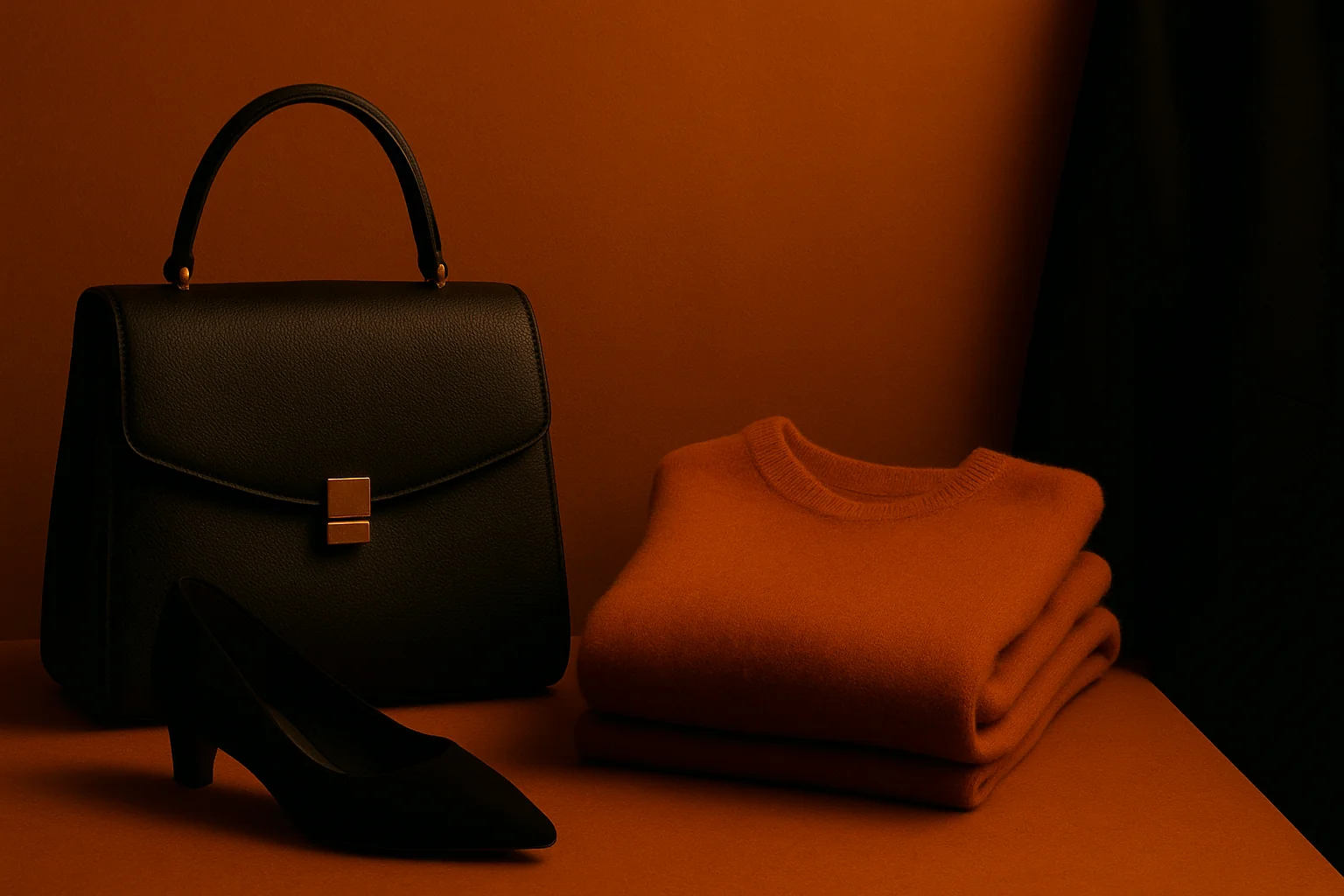
Quiet Luxury refers to a style based on fine materials, neutral or earthy colors, simple "clean" cuts, and the absence of prominent logos and symbols, so that the piece looks more like "high-quality basics" than a brand display.Aesthetically, it can be understood as an extension of the "Less is More" logic of late modernism: a trend of formal austerity versus an emphasis on material, texture, and longevity that intersects with earlier waves such as Minimalism, which associates simplicity with discipline and poise, and Normcore, which celebrates the "ordinary" as a stance against loud differentiation, the crucial difference being that "ordinary" is not economically ordinary; it is only ordinary in appearance.
This paradox leads to a distinction between "simplicity as philosophy" and "simplicity as luxury": the former may be an ethical or practical choice to minimize consumption and seek comfort, while the latter turns simplicity into an expensive commodity, investing in the ability of money to make the simple thing "the best material, the finest tailoring, the purest story," meaning that wealth does not disappear but is embodied in details that do not immediately translate to the public eye.
Historically, this pattern is not new to elites:Bourdieu explains how "taste" functions as a tool of social distinction. It is not limited to personal preferences, but is used to draw symbolic boundaries between those with "cultural capital" and those without, so that certain choices (calm, simplicity, aversion to adornment) are presented as "natural and sophisticated" while others (logos, loud colors) are labeled as "less sophisticated," thus turning aesthetics into a soft language of class.
From the sociology of fashion, Crane emphasizes that clothing is not just a body covering but a social medium for expressing positions and identities, and that the connotations of dress change historically between the visibility of class in some contexts and its play in more complex ways in others.In this sense, the rich are attracted to silent luxury because it gives them distinction without direct display: they are "above" the logic of ostentation, appearing to act with class coolness and quiet confidence, while maintaining internal cues that "insiders" recognize, which is supported by the marketing literature on "brand visibility" and how some rich people prefer luxury products with invisible labels to differentiate within their class without opening the signal of wealth to the public.
Second: Is Quiet Luxury a taste or a silent class?
To understand the "quiet class" question, one must look at how it works as a signaling system: an item may appear to be a neutral shirt or coat without a logo, but its price can be very expensive - from thousands of dollars to tens of thousands - and yet the appearance does not provide direct "evidence" of this price, creating a deliberate difference between price and appearance, and the wider this gap, the more valuable the social differentiation for those who can afford it.
Here, affluence functions as the ability to buy the "eye-catching without being noticed": owning something expensive, while protecting oneself from public judgment or the risk of being targeted or morally criticized, which is why many have described silent luxury as "complex rules" that are not easily read from outside the class.From Veblen's perspective, consumption has always been an arena of "financial simulation" and symbolic competition; what is new is not the presence of display but its form: display can become "passive" - showing ability by not showing, so that abstinence from the logo becomes a badge of status.
Bourdieu's work helps us explain why some segments of the upper class dislike loud fashion: it facilitates "imitation" and devalues the symbol; when the sign is obvious, other classes can buy a cheaper copy for symbolic gratification, but when the sign becomes technical and subtle, the symbol becomes less reproducible, and class boundaries are maintained within everyday taste (Bourdieu, 1984).
However, this stratification does not remain within a closed club, because digital platforms - especially Influencers - have turned it into a circulating trend: "how to look rich without a logo" tutorials, lists of "stealth wealth" signs, and videos of celebrity deconstructions, making elite taste a mass material.As many struggle with the pressure of inflation and the cost of living crisis, "expensive minimalism" becomes an appealing narrative that mitigates the overt provocation of wealth, giving the rich a "humble" image without actually touching the wealth gap.It may even produce a form of "false modesty": an appearance of sobriety and discipline against a financial reality that others cannot emulate, because imitation does not stop at buying a neutral jacket, but requires access to a structure of privilege. Quiet Luxury can thus be seen as a reconfiguration of class distinction in more subtle ways: moving the symbol from outside to inside, from logo to knowledge, from display to gesture.
Third: The impact of Quiet Luxury on consumers and popular culture
The Quiet Luxury wave influenced consumers as a "smart appearance style" for a noisy digital age: young people often feel that they are required to appear sober, and that crude exhibitionism is read as compensation or "immaturity," so luxury minimalism comes as a visual solution: "I care about quality, I'm quiet, I'm disciplined.But popular popularity has turned fashion into an arena of daily class struggle: one class imitates calm to appear classier, another buys cheaper alternatives to mimic the signal, while the elite maintain their superiority by taking the signal to a finer level.
At the same time, industry has benefited from this shift: it sells "simplicity" at astronomical prices, turning a concept that seems to be against overconsumption into a new profit engine. In the moral dimension, phrases like "real wealth needs no show" have become value judgments, and taste has become a tool of social categorization.Psychologically, the attraction of many to this calm may be explained by a desire for stability and control in a volatile world, but this calm may turn into a new pressure: the pressure of a "sober appearance" that codifies even spontaneity.In popular culture, Quiet Luxury has created a new fantasy of success: success is not "shouting" but "coolness," a fantasy that promotes symbolic consumption and reinforces the idea that even when money is disguised, the final judgment remains on belonging.
Conclusion
This paper shows that Quiet Luxury is not just a fashion in colors and cuts, but a cultural discourse on wealth, class, and taste. On the one hand, it can be read as a rebellion against noisy consumption and an attempt to restore the value of craftsmanship, which seems rational in a fast-paced and economically charged time. But on the other hand, the literature on social distinction and consumer signs reveals that "quiet" itself can be a tool of status: moving the symbol from logo to knowledge, from display to gesture, from public display to a signal that only those with cultural capital can pick up.
The closest analytical view is that Quiet Luxury is both: it is an attempt to limit exhibitionism, but it is also a masking game of economic power that makes inequality less visible, not less present. The issue is not simplicity itself, but the class context in which it operates: when "simplicity" is sold as a privilege and becomes a moral standard for judging people's maturity and taste, fashion becomes a language of soft social discrimination disguised behind a claim of neutrality.The conclusion calls for reading fashion as a social language that goes beyond fabric: what does a piece of clothing say about its owner? Who does it say it to? What is hidden when everything seems "quiet"? It is in these questions that the reality of "silent luxury" becomes clear.
How did silence become the language of wealth?
Silent luxury turns simplicity into the secret language of wealth, where slogans disappear... and details are spoken that only the elite understand.
Comments