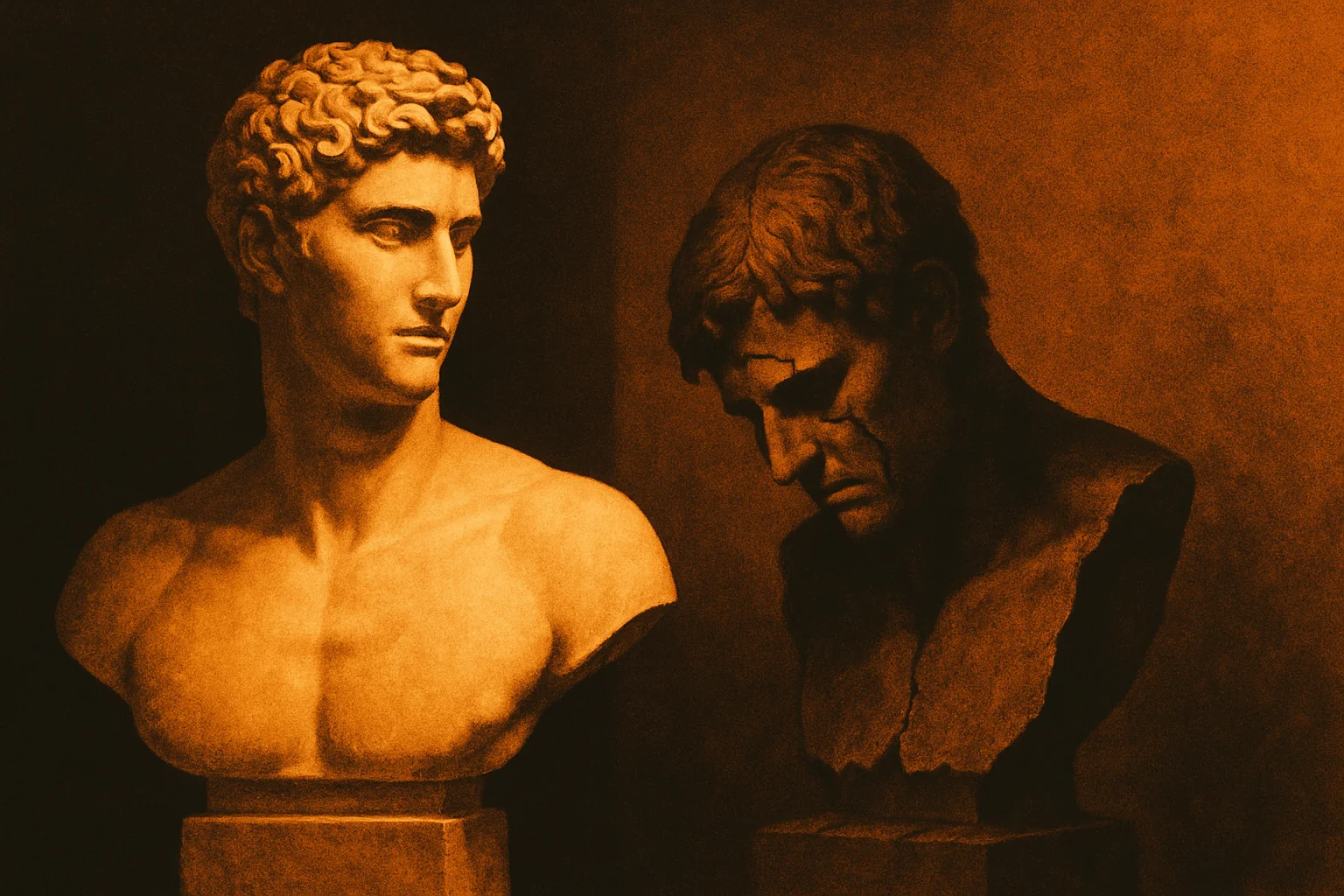
In recent decades, artworks, whether in cinema, novels, or soap operas, have witnessed a radical shift in the image of the "hero." After centuries of human culture tended to paint idealized heroes with absolute courage, moral purity, and unblemished integrity, audiences today are drawn to completely different models: gray, broken, indecisive, flawed, and sometimes even engaging in acts that are not considered "heroic" in the traditional sense.This shift not only reflects a change in artistic taste, but also reveals a profound shift in the human understanding of himself and the world around him in light of a fragmented social, political, and economic reality, where perfection is no longer a realistic or even desirable value, and people are more interested in recognizing their weakness and fragility.Social psychology studies indicate that audiences today are more inclined to sympathetic characters, admitting mistakes and contradictions, because these qualities allow for a kind of "existential mirror" through which the recipient sees himself. Thus, the "mythical" hero is no longer able to represent contemporary man, who is predominantly anxious, lost and searching for himself.
The audience's preference for flawed heroes is often related to the fact that these characters represent a reconciliation with a complex reality, where idealism is no longer convincing in an era where the flaws of political systems, the cracks in social institutions, and the collapse of trust in "flawless models" are exposed.Recent studies in contemporary narratives suggest that the emergence of the Anti-Hero reflects a narrative and moral crisis that the world has been experiencing since the end of the twentieth century, as societies have lost faith in the great certainties offered by traditional science (Harrison, 2021).Therefore, when we watch a character like Walter White in BreakingBad,Don Draper in MadMen, or theJoker inJoker, we are not only watching a narrative of contradictory characters, but we are faced with heavy questions about power, justice, the self, and moral boundaries.This type of character makes us rethink what it means to "be a hero" in a world where moral lines have become less clear and more blurred, leading many scholars to consider the modern hero as the embodiment of the "anti-human" who resists traditional idealized models in search of a new personal meaning.
On the other hand, the emergence of the broken hero reflects our changing view of morality and humanity, where characters are no longer judged based on the binary of good and evil, but on the ability of the artwork to reveal the depth and complexity of human experience. Researchers in narrative ethics point out that viewers are more inclined to favor troubled characters because they are more "honest" than perfect characters, and because they reflect real-life morality - a morality that resembles the daily negotiation between desires and duties, not canned principles (May, 2020).In this context, the contemporary hero has become a testing ground for the same moral question: Is morality fixed or changing? Can a person be "good" despite his flaws? Is moral fallibility a sign of weakness or the result of deeper social conditions? This shift indicates that contemporary culture is no longer looking for an idealized role model, but a psychological and philosophical mirror that allows it to understand its own subjective and existential fragility, which explains the great popularity of works that question the meaning of justice, power, and suffering in a world of existential anxiety.
Modern novels and series use the image of the broken hero as a tool to raise complex issues that go beyond the individual character to analyze corruption, absurdity, and the conflict between order and chaos. A character like Arthur Fleck inJokerbecomesa gateway to understanding the relationshipbetweenthe individual and the system and how social oppression can create a monster instead of a hero. In Gameof Thrones, characters are built on the principle of complete moral disintegration: good is not pure, evil is not radical, and every hero carries within him the seeds of his own downfall.Research in cultural studies suggests that literature and cinema use the "broken hero" as a means of questioning power and justice, with the modern hero becoming more of an embodiment of society's crises than a solution to them (Walker, 2023). Thus, the tale becomes a critical space that challenges politics, classism, the transformation of the human being into a number in a system, explains the causes of violence, and discusses the meaning of life in an increasingly futile world.
The modern hero is not just a narrative evolution, but a cultural shift that reveals a time when the world is experiencing a general loss of confidence and a shift in the perception of the human self. Whereas the old hero was based on the model of rising nationalisms that imagine themselves strong and idealized, today's broken hero reflects a world that has lost its certainty and in which man has become a being in search of meaning amid chaos. Thus, this type of hero not only reflects an artistic shift, but a social document to understand an era in which the boundaries between heroism and fall, morality and reality, and the self and its image are blurred in the mirror of the contemporary world.
Watch the video for more.
Comments