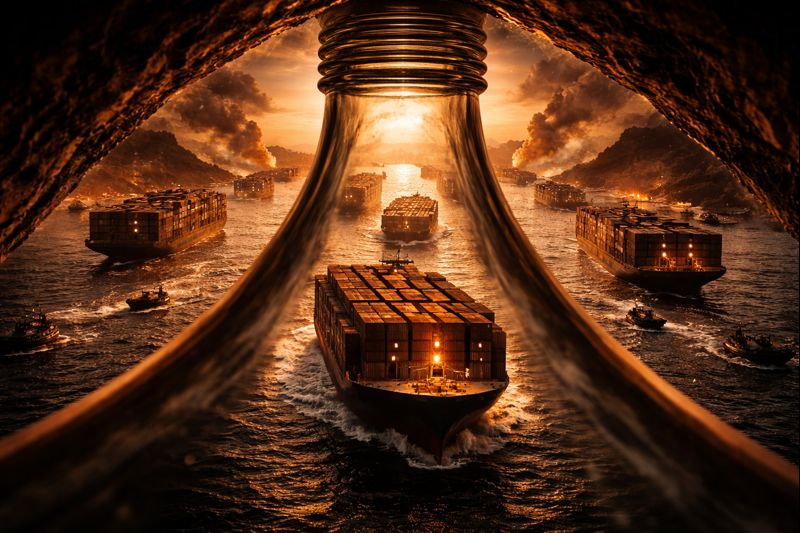
The attacks in the Red Sea since late 2023 have turned one of the world's most important trade corridors into an open conflict zone. About 12% of the world's trade passed through this route before the crisis, making any disruption - even partial - an immediate shock to supply chains and commodity and energy prices.
The first blow came from marine insurance. Coverage that was calculated at 0.1% of the ship's value jumped to 1-2%, and cargo insurance rose from 0.6% to nearly 2%, meaning that every trip now carries thousands of dollars in additional cost, which is passed directly back to the consumer through a wave of imported inflation that hits markets dependent on food and energy imports.
As the risks escalated, many companies opted for the Cape of Good Hope instead of going through Bab al-Mandab. The detour increased by 74%, the journey became 10-14 days longer, and the sailing time increased by 50%, causing slower deliveries, increased fuel burn, and ultimately leading to container shortages and a 20% reduction in the operational capacity of the global transportation fleet.
This temporal and financial bottleneck made the world's three largest shipping companies - which account for half of the commercial fleet capacity - reluctant to fully return to the Red Sea despite attempts to calm down, as any new disruption would turn profit into risk and pricing into instability.
In parallel, a new language has emerged in economic geography: major countries are proposing alternative routes that reduce dependence on the Red Sea and the Suez Canal, most notably the India-Gulf-Europe link project based on transporting goods by sea from India and then overland through the Gulf to the Mediterranean, but it is still a political proposal that has not entered commercial operation, while Gulf countries are expanding internal land and rail transportation networks, but they do not yet constitute a broad alternative to maritime trade.
In other words, the crisis is not just rerouting ships, it is redistributing power, shifting cost balances, and forcing the world to reevaluate supply chains.
To read the full analytical paper, please scroll down.
Comments