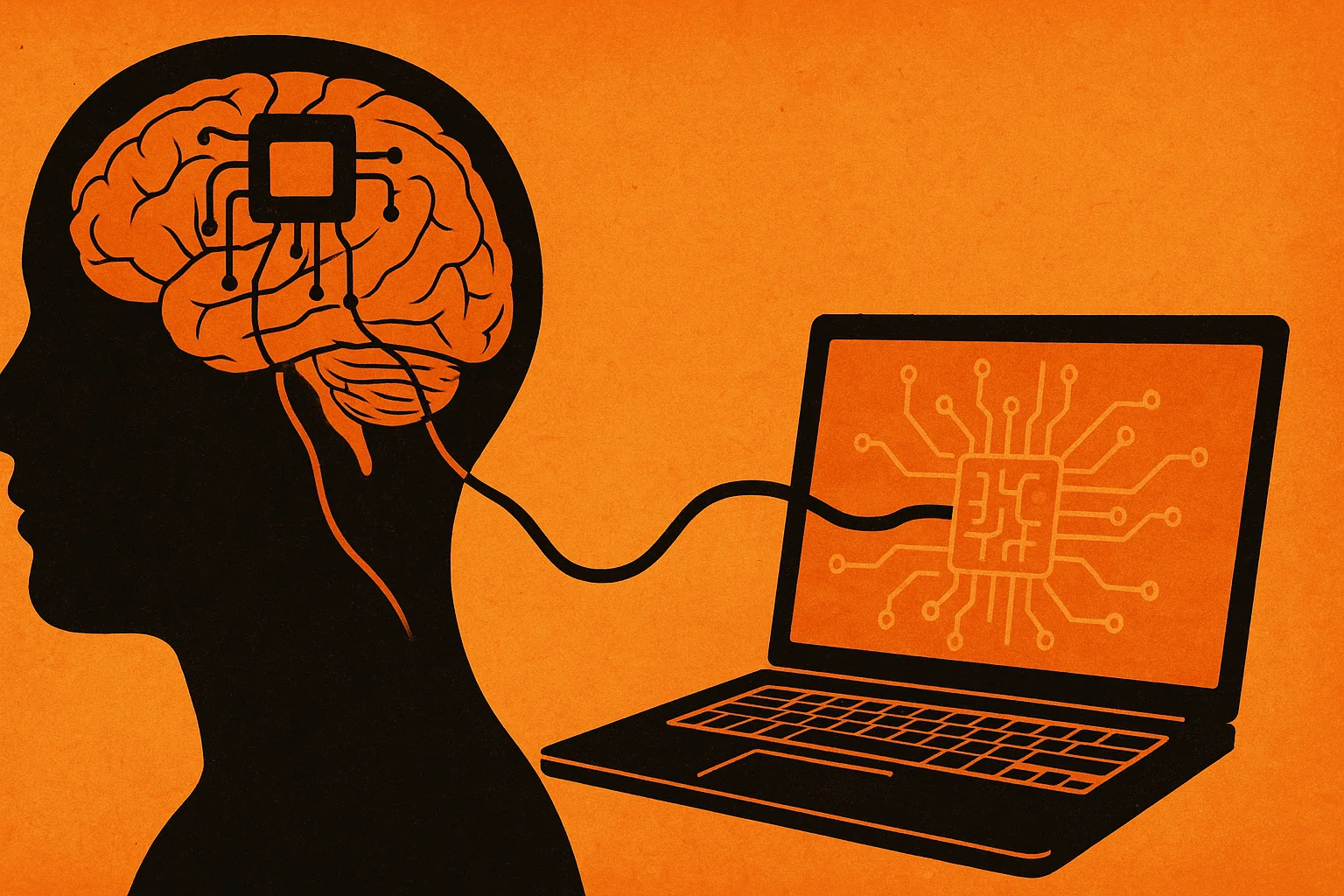
Brain-Computer Interfaces (BCI) refers to a system of sensors and algorithms that link neural activity directly to a computer or electronic device, so that intentions, movement attempts, or speech can be digitized.During 2023-2025, these technologies moved from "proof of principle" in university labs to early clinical trials led by heavily funded startups such as Neuralink, Paradromics, Synchron, and Blackrock Neurotech, with investment estimates talking about a potential market of hundreds of billions of dollars in the coming decades (Rao, 2024; Toews, 2025).This rapid transformation raises a central analytical question: How close are these companies to actually commercializing brain implants capable of restoring movement or speech before 2030, and what kind of technical and clinical breakthroughs have been achieved so far?
For Neuralink, recent years have been a watershed moment for the company. After receiving FDA approval for its first PRIME clinical trial in 2023 targeting people with quadriplegia or ALS, the company announced in January 2024 that the first brain chip was implanted in a human, as part of a trial to evaluate the safety of the Link wireless device and the accuracy of the surgical robot for implantation (Reuters, 2024; Parikh, 2024).In 2024-2025, Neuralink published an update on the Telepathy program showing that three paralyzed people who received the implant were able to use the virtual cursor and keyboard to type, control a computer and play games, with reports of signal stability and improved reaction speed over time (Neuralink, 2025).In Europe, University College London Hospitals (UCLH) in London was selected as the lead site for the GB-PRIME study to evaluate the safety and efficacy of the system in a British healthcare setting, indicating geographic expansion and organizational readiness beyond the U.S. market alone.Technically, Neuralink focuses on a fully wireless device with a large number of electrodes and a high-precision surgical robot, which aims to make the implantation more of a "routine procedure" that can be scaled up in the future to thousands of patients. However, academic reviews have cautioned that participant numbers remain limited, follow-up is short, and full clinical data transparency is not yet available (Lavazza, 2025; Chen, 2025).
In contrast, Paradromics bases its strategy on the concept of a high-data "broadband interface", with a particular focus on speech restoration in paralyzed people. The Connexus system is a small metal disk with more than 420 microelectrodes that penetrate the surface of the motor cortex associated with speech, connected via wire to a communication module implanted in the chest, allowing data transfer rates beyond those available in many competing systems (Paradromics, 2025a; Paradromics, 2025b).In May 2025, the first human recording using Connexus was performed during epilepsy surgery at the University of Michigan, showing the company that the system is capable of accurately recording human electrical signals and can be implanted and removed in less than 20 minutes using familiar surgical techniques.The biggest leap came in November 2025 when Paradromics received FDA approval to launch the Connect-One study, a long-term clinical trial targeting patients with paralytic aphasia, to evaluate the safety of the implant and its ability to convert speech intentions into text or synthetic speech at a speed that, according to the company, can reach about 60 words per minute (Broderick, 2025; Paradromics, 2025c).Paradromics is trying to differentiate itself from Neuralink through this relatively narrow functional focus (speech restoration) and by emphasizing its superiority in bandwidth, which may give it an advantage in applications that require high accuracy in decoding language-related signals.
Other companies such as Synchron and Blackrock Neurotech are also playing a pivotal role in shaping the brain-computer interface landscape, although they have received less media attention than Neuralink and Paradromics. Synchron offers a radically different model with its "Stentrode" device, an endovascular BCI implant rather than a direct implant in brain tissue.Data from the COMMAND trial published in JAMA Neurology showed that the device could be implanted in six patients with severe paralysis, achieving functional computer control for up to 12 months without serious device-related adverse events (Mitchell et al., 2023Majidi et al.,2025In 2024 Synchron announced via Clinical Trials Arena that the trial's primary endpoint had been achieved, cementing its position as one of the leading clinical trials in the field (Barrie,2024). In 2025, the company pursued integration with Nvidia's AI platforms and the Apple Vision Pro, enabling patients to control home appliances and apps by visualizing visual commands, with plans to build a cognitive AI model based on brain data to improve decoding accuracy (Wired,2025; Proactive Investors,2025).
Blackrock Neurotech represents the "first generation" of companies that have developed implanted interfaces based on the Utah Matrix, and its MoveAgain system received a "breakthrough device" designation from the FDA in 2021, a move aimed at accelerating the regulatory pathway for a system that aims to enable patients to control devices using their thoughts (Wired, 2025; Proactive Investors, 2025).Although the frequency of news about Blackrock is less intense in 2024-2025 compared to its competitors, its long experience in research trials on paralysis patients is a technical and regulatory reference, and is frequently used as a point of comparison in scientific reviews to set standards for safety and efficacy in implanted brain-computer interfaces (Chen, 2025; Chen, 2025b).
Parallel to these implanted interfaces, a second wave of companies has emerged betting on non-invasive or hybrid interfaces, such as Cognixion, which has developed an EEG helmet for ALS patients in clinical trials, or startups covered in Forbes and other media for developing AI-based helmets or head sets to interpret surface brain signals for communication or control of the digital environment (Knapp, 2025; Rao, 2025).Although these solutions are typically much less precise than invasive implants, they have a higher safety profile and a lower ethical and regulatory barrier to entry, which may allow some products to be commercialized on a small scale before the implants are fully mature.Reviews published in the Wiley Online Library clearly indicate that the field is moving towards an "ecosystem" that combines high-bandwidth implant interfaces with non-invasive or neurofeedback-based ones, with a growing role for deep learning algorithms in bridging the gap between raw neural signals and meaningful clinical functions such as speech and movement (Q. Chen, 2025; Wang, 2025; Chai, 2024).
From an analytical perspective, these developments reveal that the current race is not a purely "technical" race, but rather a race to build a complete value chain from clinical trial to manufacturing and integration with AI and cloud. Neuralink is betting on vertical integration: chip design, surgical robot and software, with some reports indicating a waiting list of thousands of patients willing to participate, which reflects brand power and media influence as much as technical advancement.Paradromics, on the other hand, focuses on "functional depth" in speech restoration and beamforming, and has a clear competitive narrative that its ability to collect unprecedented amounts of neural data may give it an advantage in real-world use scenarios.Synchron represents a less invasive "third way" based on transvascular implants, with relatively strong safety data and an advanced regulatory starting point, while players like Blackrock maintain a rich clinical science legacy that provides a basis for comparison and benchmarking. With the entry of large investors and estimates such as Morgan Stanley's report estimating the potential US market size at $400 billion, an investment environment is forming that is pushing to accelerate the transition to marketable products before 2030 (Rao, 2024).
However, scientific reviews from platforms such as Wiley Online Library show that the road to large-scale commercialization is fraught with fundamental challenges: the need for larger and more homogeneous studies, outstanding questions about the sustainability of the signal over years, risks of infection, inflammation and immune rejection, and an urgent need for clear regulatory and ethical frameworks to protect the privacy of brain data and ensure cognitive autonomy for users (Chen, 2025; Q. Chen, 2025; Lavazza, 2025).From this perspective, leading companies-Neuralink, Paradromics, Synchron, and others-have already crossed the critical threshold from "lab tests" to early clinical trials showing practical efficacy in restoring communication and digital control, but moving to implanted devices sold on a commercial scale before 2030 will depend on their ability to demonstrate long-term safety, reduce manufacturing and implantation costs, and build coherent ethical and legal systems.The overlap between our brains and machines is already a rudimentary reality in operating rooms and clinical research units, but what form it will take in everyday life-and who will hold the keys to it-is still under scientific, technical, and political negotiation over the next decade.
Comments