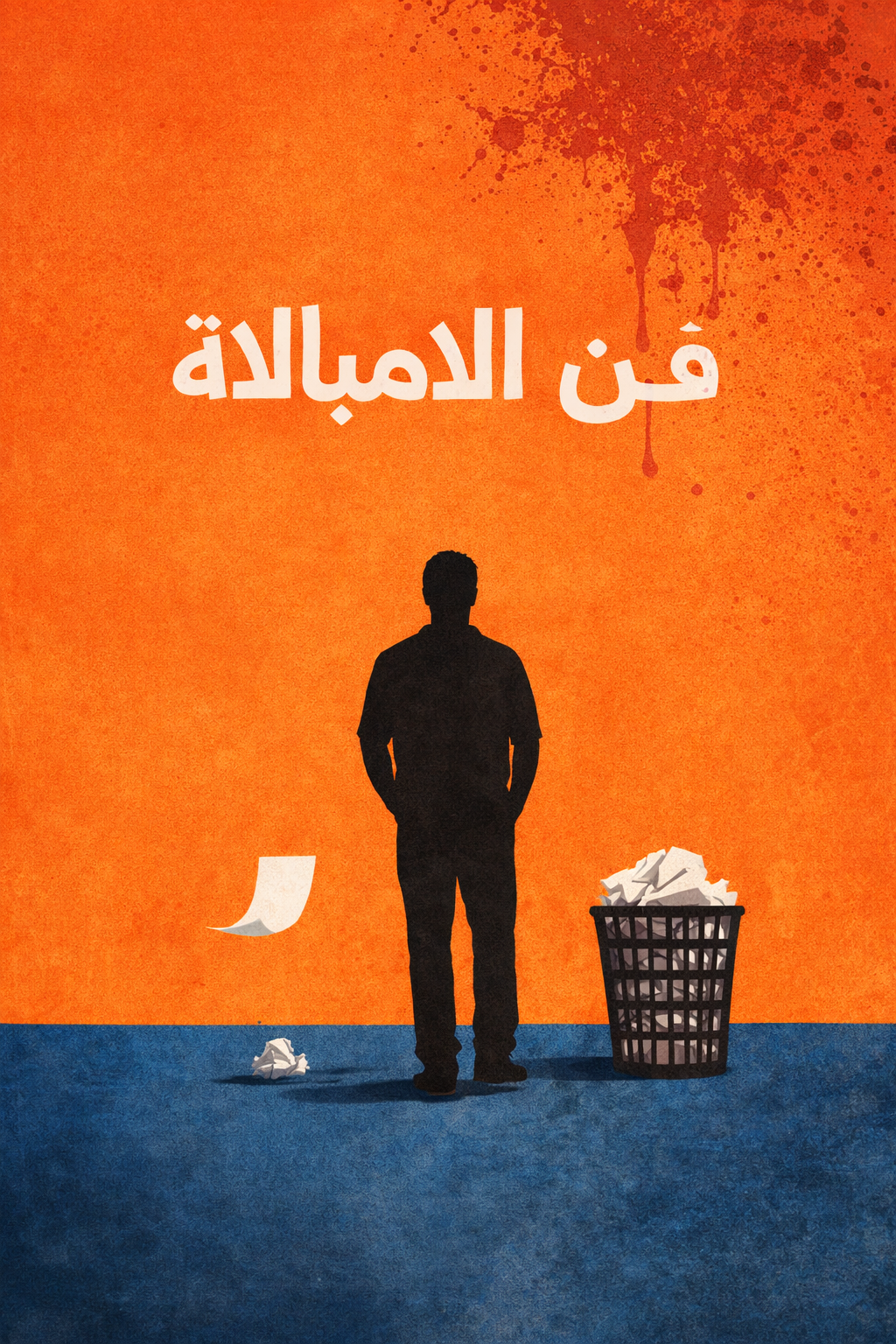
Mark Manson's The Art of Indifference does not advocate coldness or the abandonment of emotions. Rather, it attacks a common idea in modern self-improvement culture: that happiness is a permanent goal, that we have to be positive all the time, and that success means having it all and pleasing everyone.Manson flips the equation: life inherently involves pain, and the idea is not how to eliminate pain, but how to choose the pain that is worth enduring. Therefore, apathy is not about "not caring about anything," but about consciously choosing what we care about, and paying for our choices without becoming emotionally drained by things we cannot change or that are not worth our time.
The author begins by criticizing the "illusion of superiority" sold to us by quick success platforms: idealized images, unrealistic standards, a constant race for the best, and endless comparison. The issue here is not the ambition itself, but the transformation of ambition into a source of constant self-flagellation: if you are not happy, you are a failure, and if you are not at the top, you are incomplete.Manson argues that this logic creates chronic anxiety, because you are entering a game whose rules are impossible: every time you climb a rung, a higher rung appears, and every time you achieve something, you have to prove that you deserve it every day. He suggests that we de-sanctify the "image" and return to a simpler but more difficult question: What values do I really live for, and what things are worth paying for?
It is not enough to say "I want to be successful" or "I want to be happy" because these are general goals that can deceive you. What he means by better values are measurable and behavioral values, such as honesty, discipline, learning, courage, respect, and commitment, rather than "fuzzy" values such as fame, brightness, and glamour.When you choose a value like learning, you accept failure as part of the process. When you choose a value like "always looking great," every mistake becomes a scandal, every criticism becomes a threat to your identity.
Manson connects pain and meaning. He says, in practical terms, that life is not "happy or unhappy" but "painful in varying degrees." The real criterion is not to avoid pain, but to find connection to what you love, discipline to achieve what you want, say "no" to distractions, and recognize your limits.This is not an invitation to self-torture, but an invitation to change the question: instead of "How do I get rid of stress?" ask "What stress is worth it?"Because even if you run away from one issue, you will find another. The difference is that your issues may be ones you consciously choose, not ones imposed on you by the obsession with reputation and comparison.
One section of the book focuses sharply on responsibility: "Not everything that happens to you is your fault, but it is your responsibility to deal with it." This distinction is important because many people confuse feelings of injustice with helplessness. Manson does not deny that injustice exists, but he warns against turning it into an identity that prevents you from taking action.When you always consider yourself a victim, you give others the key to your life: your mood, your decisions, and your self-esteem become dependent on what they did. The responsibility he suggests is to own your reaction, your choices, and your next move. This doesn't make the world fair, but it makes you less drained, because you move the center of control from the outside to the inside.
He then moves on to a seemingly harsh but liberating idea: "You are not exceptional in the sense that the motivational culture tells us." Many of us were raised on "You are special and you will do the impossible," but when reality hits, we feel ashamed: "Why am I not what they promised me?" Manson suggests that recognizing that we are ordinary in many ways is not an insult, but rather a relief.Because when you drop the "I must be great" myth, you can honestly work on what you want without the pathological fear that you're not shining bright enough. Oddly enough, accepting mediocrity can be the beginning of true excellence, because it frees you from comparison and gives you the energy to build.
The book also discusses failure and rejection as an essential part of any meaningful life. Manson believes that people don't just suffer from failure, but from a "fear of failure" that prevents them from trying.There is no success story without mistakes, but the difference between two people is not who makes fewer mistakes, but who learns faster and tries again without their self-esteem collapsing. This ties back to the idea of values again: if your value is learning, failure is an asset, but if your value is proving perfection, failure is an insult.
In relationships, Manson offers a kind of "moral indifference": to love sincerely does not mean to melt, and to respect does not mean to abolish your boundaries.He emphasizes that maturity means taking responsibility for your feelings and needs without turning them into a weapon against the other party. He also criticizes over-reliance on "a partner to save you" or "a perfect life" as a recipe for constant disappointment, because it puts your happiness in the hands of something external.
When you remember that your time is limited, it becomes easier to say: "I can't take care of everything." "I can't be satisfied with every decision." "I can't satisfy all people." "Death is not an end, but a criterion: What will still matter if the noise disappears?" This question undermines many interests that seem great but actually consume you with no moral return.
Nevertheless, the book can be read as an invitation to "brutal simplicity": direct, sometimes shocking language, meant to wake you up from the illusion that the issue is always outside of you or that the solution is always a magic formula. Its strength is that it lays hands on the daily pains we create ourselves: comparison, seeking acceptance, fear of rejection, image worship, and the search for pain-free happiness.Its limitation is that some of its ideas may seem generic if separated from harsh economic and social contexts, but its essence remains useful: to consciously choose your values, bear the cost of your choices, and give yourself the right to be a human being who is not always "productive".
The Art of Indifference is not a training in insensitivity, but a training in the order of attention: what is worth your time, worry and effort, and what should pass without stealing your life. It asks you a practical question, not a poetic one: What do you want to suffer for? Because the type of suffering you suffer will determine the type of your life.
Comments