Introduction
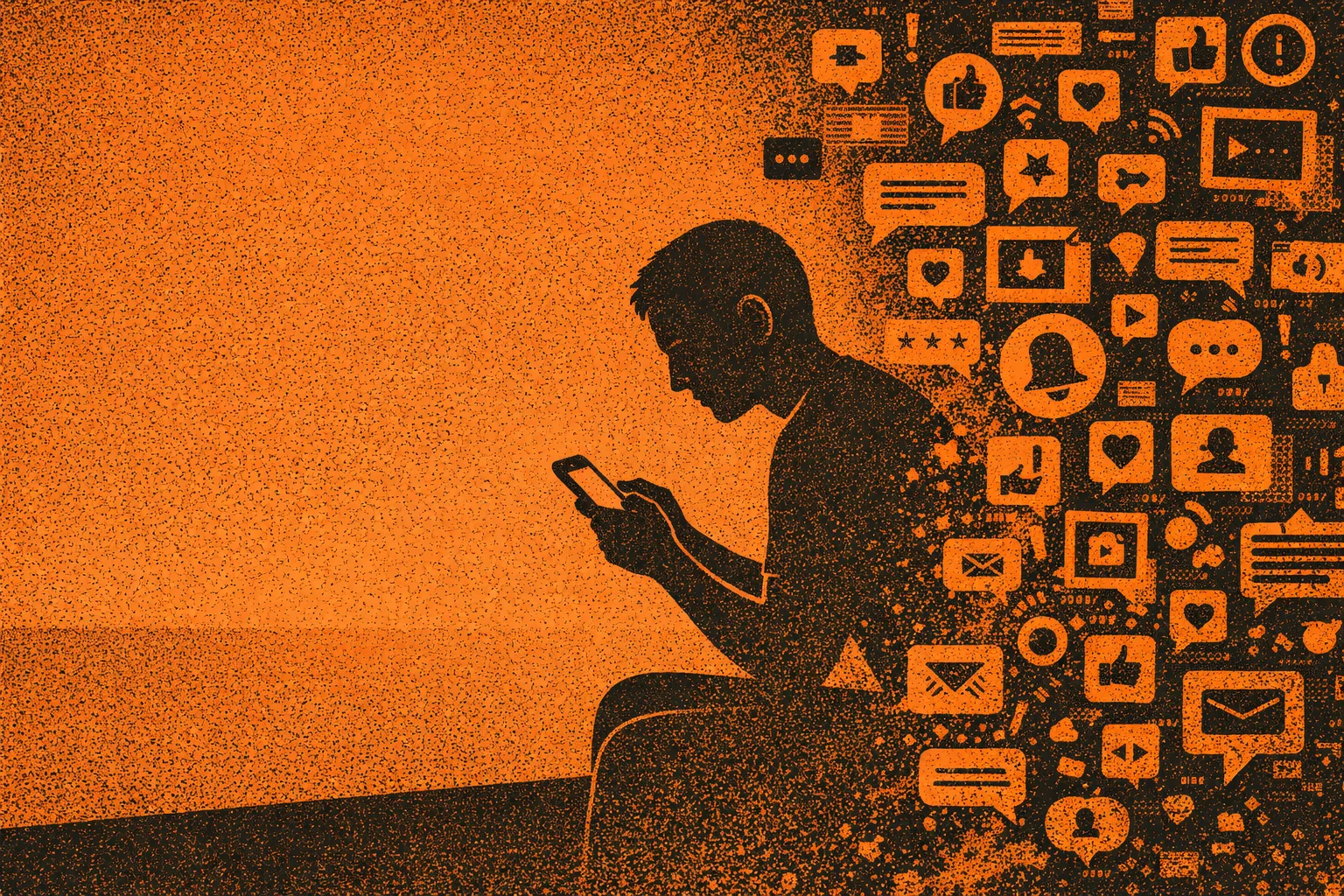
In a familiar scene today, a person sits alone after a long day and decides to turn off their phone for a few moments. The silence is almost overwhelming and anxiety creeps in. For many people, silence has become a source of turmoil rather than a symbol of comfort and tranquility.Silence has long been associated with tranquility and comfort, but now we flee from it to take shelter in the noise of phones and screens. Silence has come to be seen as an anomaly in an interconnected and stimulus-filled age. Silence interrupts the usual rhythm and leaves us alone with our thoughts, which is the last thing many people want to face.
Psychologists have linked this phenomenon to contemporary psychological realities: the acceleration of time, the pressure of constant achievement, and the reliance on digital distraction. The central question may be: Are we really afraid of the silence itself, or the questions and truths that it frees up within us? When the outside world is silent, the voices of thoughts and doubts within us become louder and louder.The philosopher Blaise Pascal showed that all of humanity's troubles stem from the inability to sit alone in a quiet room (Scientific American, 2014). A recent scientific experiment confirmed this: a large percentage of people would rather endure a noisy alarm clock than be alone with their thoughts; in one study, 67% of men and 25% of women chose to subject themselves to mild electric shocks rather than sit quietly for 15 minutes (Scientific American, 2014).
This reality reflects a deeper fear than just silence itself - it is the fear of what silence might tell us about ourselves. This paper therefore proposes the thesis that emptiness reveals our true selves and our deepest questions, while constant noise helps us bury those questions and postpone facing them. In what follows, we will address this idea through three main themes before concluding that the solution lies not in more noise, but in increasing our self-awareness in an age of noise.
The first theme: Emptiness as a psychologically threatening space
1.1 Silence and the rise of inner voices
When the noise of the outside world dies down, the noise of the inner world begins to rise. Psychologists describe silence as a mirror that reflects back to us our deepest fears and questions rather than a mere passive comfort. Once silence reigns, we find ourselves listening to our inner thoughts more loudly: worries about the future, questions about identity and meaning, recalling past losses or failures. The issue with silence is not the silence itself, but what it reveals to us.As a common behavior, many people find themselves in a quiet place and turn on the TV or background music, not to watch or listen, but simply to fill the space and break the silence that awakens inner thinking. The absence of external distractions lifts the lid on those buried concerns. As one therapist put it: "External silence highlights the noise in our heads" (Center for Healing KC, 2023).In this case, silence becomes a moment of psychological confrontation.
Recent research has found that the absence of external noise turns the mind into an echo chamber of self-doubt, leading to cycles of overthinking. Another study found that people's minds were distracted from the present moment about 47% of the time when they were awake, and they were less satisfied while distracted than when they were focused on what they were doing (Harvard University, 2010).In other words, silence forces us to confront things we may have avoided for a long time. In this way, it can be said that silence is a mirror that reflects our true psychological state - it confronts us with questions such as: Who are we really? Are we satisfied with who we are? These troubling questions (according to a recent survey, about half of the participants could not bear to sit for minutes in silence) (Scientific American, 2014) are what makes some people feel stressed in the absence of external distractions (Scientific American, 2014).
1.2 Quiet as a disruption of the cognitive defense system
The effect of emptiness is not only to release the noise of internal fears, but also to disrupt what might be called the human cognitive defense system. The modern human brain has become accustomed to a constant stream of alerts and stimuli-phone notifications, constant updates, digital noise everywhere.This constant noise acts as a sensory barrier that constantly distracts us and prevents us from thinking deeply. Many people unconsciously use this barrier as a psychological avoidance mechanism. Psychologists call this strategy experiential avoidance: intentionally avoiding disturbing thoughts and feelings by indulging in another activity, even if it leads to long-term damage (PsyPost, 2020).
For example, measurements in a recent study found that simply receiving a text notification triggered a significant spike in the stress hormone cortisol, meaning our bodies are biologically reacting to those digital interruptions (Rebalance Health, 2022). So when the stream of alerts suddenly stops, the brain goes into a state of anticipation and anxiety as if it has lost its usual state of constant alertness.Researchers have described this state as an unshielded exposure of the mind to itself; for example, people who used to use social media as an escape from negative emotions were found to experience a sudden return of those emotions when away from it (Center for Healing KC, 2023). In other words, silence itself does not cultivate anxiety, but it does remove the distractions that were covering up the underlying anxiety in the first place.
Some neurological studies suggest that painful memories and repressed thoughts thrive in silence due to the absence of external stimuli that keep us busy, making silence sometimes associated with the recall of those disturbing memories (Center for Healing KC, 2023). Therefore, it is understandable that many people avoid moments of silence: it is not so much a fear of silence itself, as a fear of the breakdown of mental defense barriers and the subsequent flood of questions and memories that may follow (Center for Healing KC, 2023).
1.3 Fear of self-confrontation
A corollary of the above is that for many, the real fear is not of silence, but of what silence might reveal about themselves. Moments of complete silence put a person in front of a mirror of their own self without falsification. In that mirror, they may discover that they are dissatisfied with the course of their life, that they feel lonely despite the many people around them, or that they are putting off crucial decisions that worry them. Daily noise - whether the voices of others or digital noise - gives us ready-made narratives about achievement and busyness that we hide behind to avoid thinking about our vulnerabilities.For example, a study showed that adolescents who reported problematic smartphone use were twice as likely to suffer from anxiety (Euronews Arabic, 2022). Other studies have indicated that excessive media use is associated with increased rather than decreased loneliness and depression (National Library of Medicine, 2018). This suggests that the constant escape from self-confrontation through digital noise is associated with higher levels of stress and mental illness.
Ultimately, this theme poses a fundamental question: do we really run away from moments of silence... because we don't like or perhaps fear the person we become in silence? This confrontation - however uncomfortable - may be a necessary route to long-term anxiety relief, rather than a vicious cycle of escapism.
The Distraction Economy - How did noise become a psychological necessity?
2.1 Notifications: The Engineering of Anxiety
It could be argued that modern technology has engineered anxiety into our daily lives. Smartphone apps and social media platforms are forcing attention through a barrage of notifications designed to constantly pull us in.Each notification that arrives on our phone is not just a fleeting sound or vibration; it's a neural poke that excites our nervous system and prevents us from relaxing. Neuroscientists explain that every time a phone rings or vibrates, the brain releases a burst of stress hormones like adrenaline and cortisol in preparation for a reaction (Healthline, 2022; Rebalance Health, 2022).
Over time, the brain adapts to this state of constant alertness and becomes constantly on the alert. Even when nothing happens, the brain remains in anticipation of the next stimulus - a chronic state of anxiety and anticipation that generates subtle internal tension.It's not surprising then that many people feel unsettled when they are away from their phone. Surveys in the United States, for example, have shown that 44% of adults get anxious if they don't have their phone with them (Cross River Therapy, 2023), and statistics show that the average person checks their phone about 80 times a day, or once every 12 minutes on average (Cross River Therapy, 2023), showing how ingrained the habit of constant checking has become.The condition even has a scientific term, Nomophobia. For many, the smartphone has become a psychological armor that cannot be abandoned for fear of being lonely or missing out on something new.
This anxiety is not an unintended side effect, but a deliberate design by tech companies to ensure that the user is always connected to the service. Constant alerts act as a mechanism to keep us alert and engaged, serving the digital distraction economy that these platforms thrive on.
2.2 Short videos and the prevention of reflection
In recent years, short video platforms such as TikTok and Instagram Reels have invaded people's lives, offering fleeting content that lasts only a few seconds each. This may seem like an innocent pastime to fill free moments, but it actually systematically prevents deep thinking. When one is immersed in non-stop clips-15 seconds at a time-there is no opportunity for the mind to wander or process thoughts.What's more, the flow is automatic and uninterrupted, with no natural breaks for the brain to recover. Recent analyses have pointed to the impact on attention abilities. A comprehensive review of 71 studies involving nearly 100,000 participants found a moderate association between heavy consumption of short videos and reduced self-control and attention span in individuals (ScienceAlert, 2023).
Experts explain that the algorithms of these apps are designed to deliver successive doses of sudden novelty that appeal to the brain's reward system. Each swipe to a new clip promises the brain a surprise or pleasure, releasing a quick dopamine rush that reinforces the behavior of continuing to watch.The user enters an addictive cycle of continuous sensory overload, preventing the natural mental wandering that would otherwise punctuate quiet moments. Interestingly, research suggests that this intense pattern of fast clip consumption can impair impulse control and shorten attention spans over time (ScienceAlert, 2023).
As a result, we find ourselves preferring endless scrolling to minutes with our own thoughts. Quiet meditation or daydreaming has become obsolete, replaced by the constant sensory overload that ensures the mind is never without input for a single moment. While this state provides a temporary escape from wandering and personal questions, in the long run it deprives us of important mental skills.For example, cognitive psychologists assert that children and adolescents who spend most of their free time in front of fast content gradually lose the ability to tolerate moments of boredom and stay with their own thoughts, impairing their ability to imagine and solve issues (ScienceAlert, 2023). In short, the short video distraction economy constantly occupies our minds to prevent them from thinking freely and deeply about self and reality.
2.3 Chats as a false sense of security
Instant communication via text messages and chat apps is an essential part of modern life, but it is often less about real communication and more about seeking illusory reassurance. Quick digital chats make us feel like we are constantly surrounded by others, even if the content is superficial or routine. Many people use chats not to convey important information, but simply to confirm their presence in the lives of others and prove their existence; every message exchanged, however fleeting, is a guarantee against loneliness.On the other hand, any void or delay in responding in the context of these conversations can open an anxious gap in the psyche. It is not surprising then that some people feel nervous if minutes go by without a response during an active conversation, and are quick to send another message or a question mark to hurry up a response.The fear of silence also creeps into digital communication: every silence between messages signals the return of anxiety. Data shows how attached people are to this illusory safety: one-third of teenagers, for example, report feeling lonely if their phone is not constantly available, and 66% of them become anxious if they are without their phone for even a short time (Cross River Therapy, 2023).
These figures reveal that in chatting, we are not looking for the content of the conversation as much as we are looking for constant presence - the elimination of moments of emptiness in which we may feel only ourselves. The unfortunate irony is that this digital preoccupation does not address the roots of loneliness or anxiety, and may even increase them.
Theme 3: Breaking the Cycle of Escape - "The Daily Escape Map"
3.1 When do you escape? Analyzing the moment
The first step is to observe when we turn to the phone for no apparent reason-analyzing the moment of escape itself. Do you automatically grab your phone whenever you have a spare minute? How many times a day do you open your apps without a specific purpose? Statistics show that this behavior is very frequent: the average user checks their phone dozens of times a day, often without a pressing need (Exploding Topics, 2023).It is also clear that there are critical times when this behavior increases, especially before bedtime, which is one of the most dangerous times to escape, as screen light and distractions contribute to insomnia and poor sleep quality, just before going to sleep, when waking up, and in moments of distraction while working or studying.Surveys have found that the majority of people (up to 80%) check their phones within the first 15 minutes after waking up (Blue Cross Blue Shield of Michigan, 2022), and about 86% use it just before bedtime (Amerisleep, 2023). Many do so while at work as well, meaning that we escape to our phones even in the midst of our daily tasks.
From analyzing these moments, we realize an important fact: we don't just run to the phone to escape boredom, but often to escape thinking. The moments when we rush to the phone screen may be the moments when the mind starts questioning or wandering into personal matters - and we rush straight to the digital haven before those wanderings can escalate.Creating a daily "escape map" - marking the times and circumstances when we reach for the phone for no reason - is a first step in breaking the escape cycle.
3.2 Why do you run away? Identifying the "psychological trigger"
After identifying the moments of escape, the key question is: "Why are we running away?" This is where it becomes a self-awareness exercise, by asking ourselves honest questions every time we feel the compulsive urge to browse the phone aimlessly. These diagnostic questions include: "What thought am I trying to silence right now? Am I running away from a pending decision that requires confrontation? Am I running away from an uncomfortable feeling or truth I don't want to accept? Perhaps I am afraid to evaluate myself at this moment and prefer to hide behind the screen?Psychological studies have shown a strong correlation between the tendency to avoid disturbing internal experiences and excessive phone use; that is, people who run away from their negative thoughts and feelings are more prone to smartphone addiction (PsyPost, 2021). In contrast, those with a higher degree of mindfulness - the ability to stay in the present moment - are less likely to get sucked into this digital addiction (PsyPost, 2021).
This data suggests that the answer to the question "Why do I escape?" often lies within us: we use the phone as a way to avoid confronting what worries or distresses us deep inside. Recognizing this motivation is half the solution; just being aware that I open the phone because I am nervous about a conversation or worried about a decision I am avoiding helps me break its power over me. Of course, these are not ready answers but rather a mirror to hold in front of ourselves to clearly see the escape mechanism in action.
3.3 What does it mean to run away every day?
If we draw our own "escape map," we will find an interesting paradox: our phone addiction peaks when we are lonely, but does not disappear even when we are among people. The truth is that the void we are escaping from is not a void in the literal sense, but a psychological space for self-realization.When we fill every spare minute with noise, we deprive ourselves of a precious opportunity to recognize our true feelings and thoughts. Research has shown that regular time spent in silence without stimuli improves mental health and reduces stress (CBS Austin, 2023) - meaning the issue has never been the silence itself, but our approach to it. By turning silence into a conscious choice instead of a threat, we can retrain ourselves to tolerate ourselves without avoidance.
We don't have to abandon technology or isolate ourselves, but rather gradually increase our ability to be present with ourselves without artificial support. Recent studies suggest that even short periods of silence per day (say 10-20 minutes spread throughout the day) can significantly improve mood and concentration, and even contribute to the brain's resilience to stress (CBS Austin, 2023).In the end, the question we need to ask ourselves is: do we really need to fill every minute of our time, or would it be better to increase our tolerance for our own company?
Conclusion
In this paper, we tried to deconstruct the phenomenon of escaping from silence to digital noise, and it turns out that silence itself is not the source of stress so much as the mirror that reflects our inner tension. The real issue lies in the questions and feelings that silence evokes in us - the ones we try so hard to escape. On the other hand, digital noise is not an innocent pleasure or pure entertainment as we think, but often acts as a psychological anesthetic that buries our anxiety under the accumulation of alerts and superficial content. We have become using noise to silence our minds, not to revitalize them.
This existential question sums up the essence of the issue. If we realize that our fear is not of silence itself but of what it might reveal to us, we can begin to change our relationship with silence. What is needed is not to reject technology or eliminate noise from our lives - that is unrealistic - but to develop awareness. Awareness of what we feel when we are silent, and awareness of our motivations when we escape into the noise.Through this awareness, we will find that moments of silence can be transformed from a threat to an opportunity; an opportunity for honest self-examination, an opportunity to regain control of our attention and our minds. As studies have shown, embracing a little silence every day may be the key to enhancing our mental health rather than constantly seeking to numb it (CBS Austin, 2023). In conclusion, learning to consciously listen to the silence within us may be the first step towards true rest - a rest that we need most in a world that has become addicted to noise.
Comments